
The Ultimate Guide to Upland Bird Dog Training
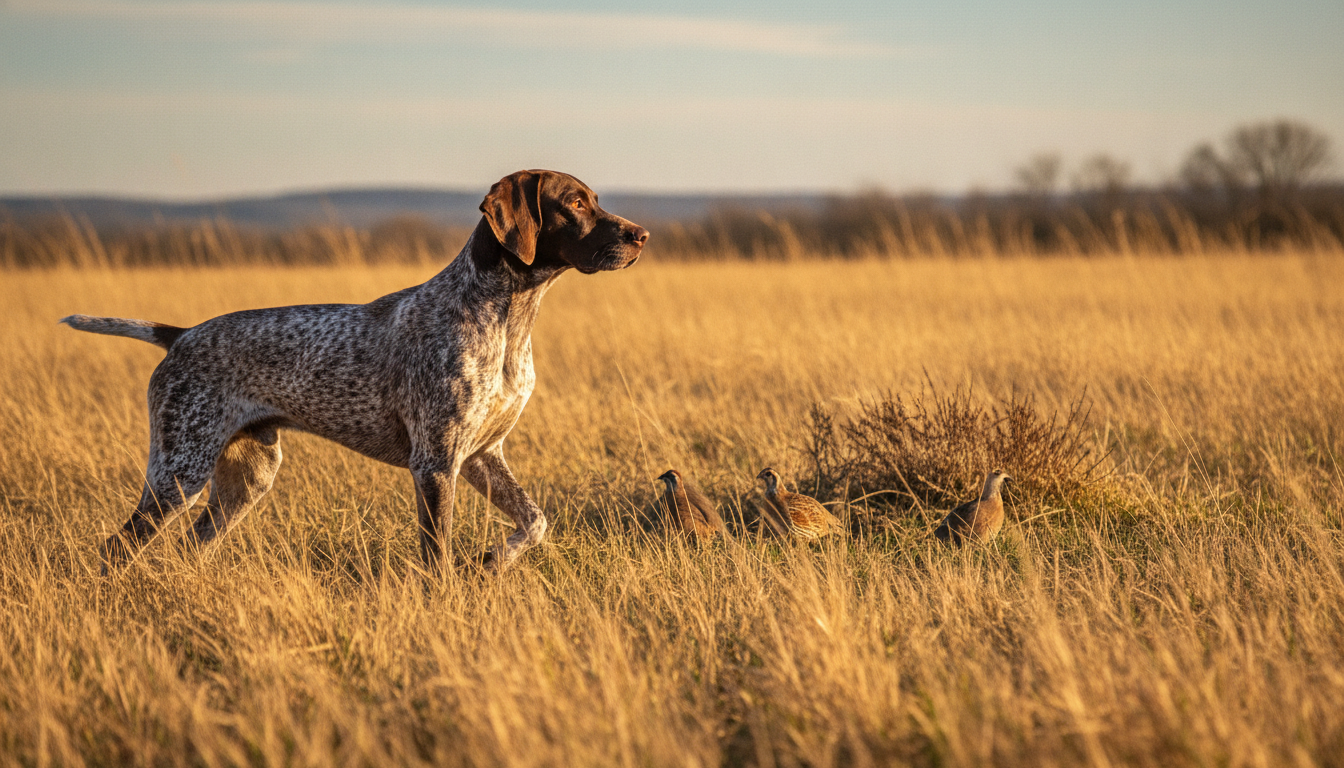
Embarking on the journey of upland bird dog training is more than just teaching a dog a set of skills; it’s about forging an unbreakable partnership built on communication, instinct, and mutual respect. A well-trained bird dog is the heart of a successful hunt, transforming a walk through the field into a symphony of controlled intensity and natural talent. Beyond the practical benefits of a fuller game bag, a properly trained canine companion ensures a more ethical and efficient hunt, where game is quickly located and cleanly retrieved. This comprehensive guide will walk you through the essential stages of developing a top-tier hunting partner, from foundational puppyhood lessons to advanced in-field scenarios. We’ll provide a structured approach to help you build a confident, reliable, and passionate upland bird dog that is a joy to work with both in the field and at home.
Key Takeaways
- Start Early: Foundational training, including socialization, crate training, and basic obedience, should begin the moment you bring your puppy home.
- Consistency is Crucial: A consistent approach to commands, expectations, and rewards is the single most important factor in successful bird dog training.
- Build on Basics: Core skills like retrieving, the “whoa” command, and quartering are the building blocks for all advanced field work.
- Positive Gun Introduction: Safely and slowly introducing your dog to gunfire by associating it with positive experiences, like retrieving, is critical to prevent gun shyness.
- Master Steadiness: Training a dog to be steady to flush and shot is the hallmark of a finished bird dog and is essential for safety and control.
- Maintain Skills Year-Round: Off-season training and conditioning are vital for keeping your dog physically fit and mentally sharp for opening day.
- Know When to Seek Help: A professional bird dog trainer can provide invaluable expertise for tackling specific challenges or advancing your dog’s skills to the next level.
Laying the Foundation: Early Training and Basic Obedience
The journey of training an upland bird dog begins long before you ever step into the field. The work you put in during the first few months of your puppy’s life establishes the framework for every future lesson. This foundational period is all about building confidence, establishing clear communication, and nurturing the natural instincts that make a great hunting partner. From selecting the right puppy to mastering basic commands, these early steps are non-negotiable for developing a composed, obedient, and eager-to-learn gun dog.
Puppy Selection and Socialization: The process starts with choosing a puppy with the right genetic potential. Look for reputable breeders with proven bloodlines in hunting and field trials. When evaluating a litter, observe the parents’ temperament and hunting style if possible, as these traits are strong indicators of a puppy’s potential. Once your puppy is home, early socialization is paramount. Exposing your pup to a wide variety of sights, sounds, people, and other stable dogs builds a confident, well-adjusted adult dog that is less likely to be fearful or reactive in new environments. This crucial period shapes their ability to handle the pressures and novel experiences of a day’s hunt.
Crate Training: Often misunderstood, crate training is one of the most valuable tools in a dog owner’s arsenal. For a hunting dog, it’s indispensable. The crate serves as a safe, den-like space where your dog can rest and decompress. It is a critical component of housebreaking and prevents destructive behavior when you can’t supervise your pup. Furthermore, it teaches patience and an “off-switch,” essential traits for a dog that will spend hours waiting calmly in a vehicle or blind. Introduce the crate positively with treats and praise, ensuring it’s a place of comfort, not punishment. A dog that is comfortable in its crate is a better travel companion and a more manageable partner on hunting trips.
Basic Obedience Commands: A solid foundation in basic obedience is the bedrock of all advanced bird hunting training for dogs. Essential commands like “Sit,” “Stay,” “Come” (recall), and “Heel” establish you as the leader and create a common language. A reliable recall (“Come”) is arguably the most important command for safety and control. “Heel” ensures your dog walks calmly by your side without pulling, a skill that translates directly to control in the field. Use positive reinforcement techniques, rewarding desired behaviors with praise or treats to build a strong, willing partnership. Consistency from all members of the household is key to avoiding confusion and reinforcing these fundamental skills.

Developing Core Upland Game Dog Skills
With a solid foundation of obedience and socialization in place, you can begin to shape your dog’s natural instincts into the specialized skills required for upland game dog training. This phase is about introducing the core concepts of the hunt: finding birds, holding a point, and retrieving downed game. It’s a thrilling stage where you’ll see your dog’s genetic predispositions come to life. Each skill builds upon the last, creating a reliable and effective hunting partner. This is where the real fun of bird dog training begins, channeling prey drive into a controlled, cooperative effort.
Introduction to Birds and Dummies: The first step is to ignite your puppy’s prey drive in a positive and controlled manner. Start by introducing a bird wing tied to a string or a soft training dummy. Make it a fun game of chase and light tug, always ending on a positive note while the pup is still excited. The goal is to build a powerful, positive association with the scent and sight of game. Overexposure to live birds at a young age can sometimes lead to bad habits, so the focus should be on building confidence and desire with these introductory tools first.
The “Whoa” Command: For pointing breeds, the “Whoa” command is the cornerstone of control in the field. It is the ultimate “stop” command, telling your dog to freeze in place until released. Teaching “Whoa” instills steadiness and prevents a dog from flushing birds prematurely (bumping birds). A common method involves using a “whoa board” or a training bench, where the dog learns that moving its feet is not an option. You physically place the dog back into position every time it moves, reinforcing the command until it holds steady. This command is separate from “Stay” and requires absolute compliance, forming the basis for steadiness to flush and shot later on.
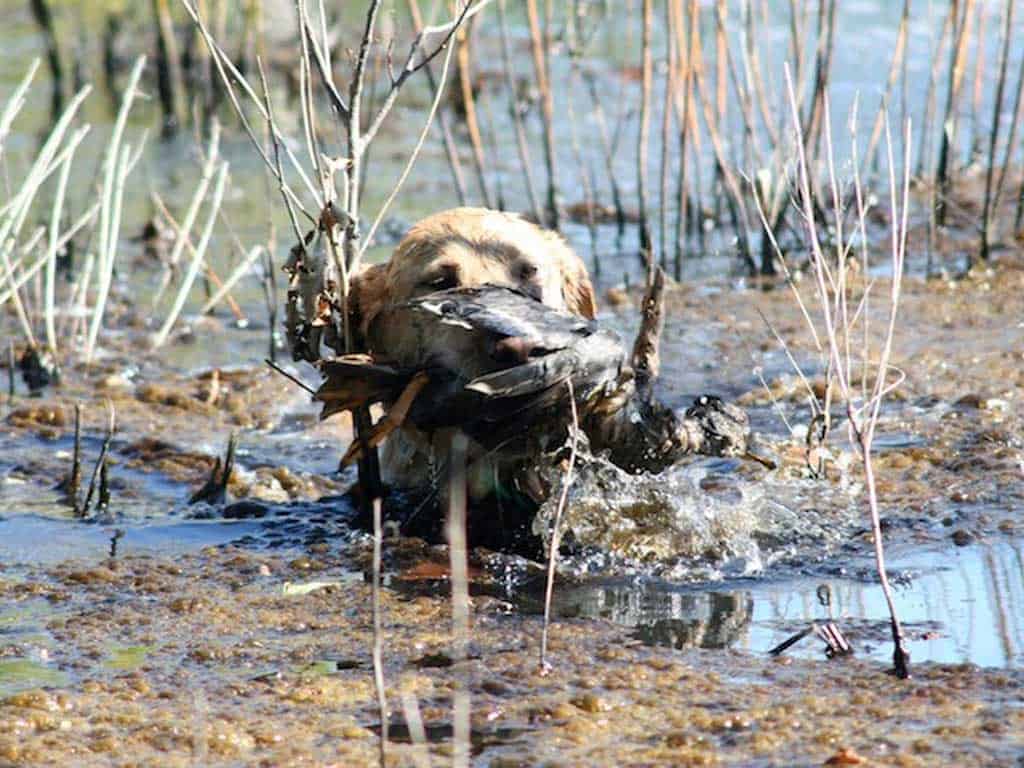
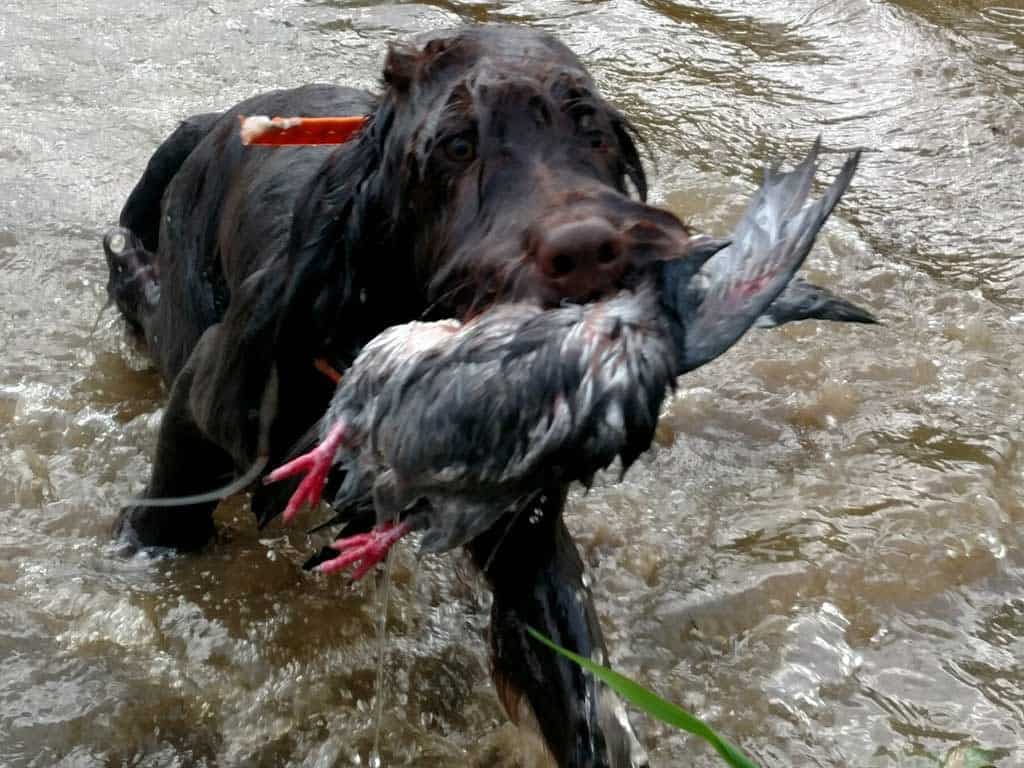
Basic Retrieving Skills: A reliable retrieve ensures that no downed game is lost, a cornerstone of ethical hunting. The retrieve should be broken down into simple steps: reach for the dummy, hold it gently, come back, and deliver it to hand. Initially, keep sessions short and exciting, using a narrow hallway to prevent the dog from running off with the dummy. Address issues like dropping the dummy or playing keep-away immediately and consistently. For dogs that don’t retrieve naturally, a more structured “trained retrieve” or “force fetch” program may be necessary to build reliability.
Quartering and Patterning: An upland dog’s primary job is to find birds, and an efficient search pattern is crucial. Quartering is the technique where a dog works back and forth in a zigzag pattern in front of the hunter, staying within gun range. To teach this, you can walk a straight line through a field and toss dummies or plant scented items to your left and right, encouraging the dog to range out. The dog learns to hunt for you, using the wind to its advantage to scent birds. This skill ensures you cover a field thoroughly and effectively, maximizing your opportunities.
Advanced Field Work and Hunting Scenarios
Once your dog has mastered the fundamental skills, it’s time to transition into advanced field work. This phase of pheasant hunting dog training focuses on polishing your dog’s performance and preparing them for the complexities of a real hunt. It involves introducing the sound of gunfire, enforcing absolute steadiness when a bird takes flight, and developing off-leash handling skills. This is where all the previous training converges to create a finished, reliable gun dog. This stage requires patience and precision, as you’ll be proofing your dog’s skills against the ultimate distractions of live birds and gunshots.
Gun Introduction and Steadiness: A careful and gradual introduction to gunfire is absolutely critical to prevent creating a gun-shy dog—a problem that is incredibly difficult to fix. The process should always associate the sound of a gun with a positive experience, typically retrieving. Start with a helper firing a starter pistol or a small-caliber gun from a significant distance (100 yards or more) while you toss a dummy for your dog. As your dog shows confidence and focuses on the retrieve, you can gradually decrease the distance over many sessions. The key is to progress at the dog’s pace, ensuring the noise is always secondary to the fun activity.
Steadiness to Flush and Fall: The hallmark of a truly finished bird dog is steadiness. This means the dog must remain stationary when a bird is flushed, when the gun is fired, and when the bird falls. Breaking—or chasing after the bird on the flush—is a common issue that must be corrected for safety and control. This skill is built upon a rock-solid “Whoa” command. Using a check cord and live, planted birds, you can reinforce the command at the moment of the flush. The dog learns that its job is to point and hold, not to chase. Only after the bird is down and you give the retrieve command should the dog move.
Advanced Handling and Directionals: In the field, you won’t always be right next to your dog. Advanced handling skills, taught through whistle commands and hand signals, allow you to guide your dog at a distance. Whistle commands for “Sit/Stop” and “Come” are invaluable. Directional training teaches a dog to take a line to the left, right, or back to retrieve a “blind” bird—one it didn’t see fall. These skills are essential for both upland and waterfowl dog training, giving the handler precise control over the dog’s position and retrieve, which is crucial for complex recovery situations.
Working with Live Birds: Transitioning from dummies to live birds is a significant step that brings training to a new level of realism. Using pigeons or chukars in bird launchers allows you to control the exact moment of the flush, providing the perfect opportunity to work on steadiness. Live birds create a level of excitement that dummies cannot replicate, making them the ultimate test of your dog’s training. Always prioritize safety and ethical considerations, ensuring birds are handled humanely and used to reinforce good behavior, not to encourage bad habits like chasing or catching.
Crafting Your Upland Bird Dog Training Program
Creating the best upland bird dog training program is less about a secret formula and more about a commitment to structure, consistency, and understanding your individual dog. A well-designed plan provides a clear path from basic obedience to finished field work, ensuring no steps are missed. It involves setting realistic goals, troubleshooting problems as they arise, and maintaining skills throughout the year. A successful program is a living document, adapting to your dog’s progress while always reinforcing the fundamentals through repetition and positive reinforcement.
Developing a Structured Training Schedule: A consistent training schedule is vital for progress. Short, frequent sessions of 10-15 minutes are often more effective than long, infrequent ones, as they keep the dog engaged and prevent burnout. Your plan should be progressive, mastering one skill before introducing the next. Balance these formal training periods with plenty of free play and rest, which are essential for a puppy’s mental and physical development. A structured schedule helps build a routine that the dog understands and thrives on.
Consistency and Repetition: Consistency is the golden rule of dog training. Every command should mean the same thing every time, and rules should be enforced by everyone in the household. Repetition is how dogs learn and build reliability. Each successful repetition of a command, from a simple “Sit” to a complex retrieve, strengthens the neural pathways in the dog’s brain, making the behavior more automatic. This muscle memory is what you’ll rely on in the high-excitement environment of a real hunt.
Troubleshooting Common Training Challenges: Every trainer will face challenges. Common issues in bird dog training include a “hard mouth” (damaging birds on the retrieve), blinking (avoiding birds), breaking (chasing a flushed bird), and refusing to retrieve. The key is to address these problems calmly and immediately. Often, the solution is to go back a few steps in the training process and reinforce the fundamentals. For example, a dog that starts breaking on the flush needs more work on the “Whoa” command in a controlled setting. Substandard retrieves can often be fixed with focused drills that revisit the basics of the trained retrieve.
Maintaining Skills Off-Season: The hunting season is short, but training is a year-round commitment. The off-season is the perfect time to reinforce obedience, sharpen skills, and maintain physical conditioning. Continuing with retrieving drills, practicing steadiness, and engaging in scent work keeps your dog mentally sharp. Physical fitness is equally important. Activities like swimming provide excellent low-impact exercise that maintains cardiovascular health and muscle tone, reducing the risk of early-season injuries.
Transitioning to Real Hunts: Your dog’s first real hunt should be a positive and controlled experience. It’s not the time to introduce new training concepts. Instead, focus on what the dog already knows. It can be beneficial to let a partner handle the shooting on the first few outings, allowing you to focus entirely on handling your dog and reinforcing steadiness. Keep the first few hunts short and end on a high note. Manage your expectations; young dogs will make mistakes. The goal is to build confidence and solidify the connection between their training and the real thing.
When to Seek Expertise: Choosing a Bird Dog Trainer
While training your own bird dog is an incredibly rewarding experience, there are times when seeking the guidance of a professional bird dog trainer is the wisest course of action. A professional can help overcome specific training hurdles, accelerate progress, or provide the finishing touches to a dog’s education. Recognizing when you need help and knowing how to select the right trainer are crucial decisions that can significantly impact your dog’s success and your future hunting partnership.
Recognizing When Professional Help is Needed: Don’t be afraid to ask for help. A professional trainer can be invaluable if you’re facing persistent behavioral issues like gun shyness or a hard mouth, or if you lack the time or facilities for advanced training like live bird work. For first-time handlers, a trainer can provide a solid foundation and teach you the proper techniques. Even experienced handlers can benefit from an expert’s perspective to polish their dog for hunt tests or to simply make them a more reliable hunting companion. A good trainer doesn’t just train the dog; they teach the owner how to be a better handler.
Qualities of a Great Bird Dog Trainer: The best trainers are more than just dog handlers; they are skilled teachers and communicators. Look for a trainer with years of hands-on experience and a deep understanding of different breeds and their instincts. A great trainer has a clear, systematic training methodology but is also flexible enough to adapt their approach to an individual dog’s personality. They should prioritize the dog’s well-being, using humane and effective training practices. Patience, professionalism, and a genuine passion for developing hunting dogs are non-negotiable qualities.
Questions to Ask Potential Trainers: Before entrusting your dog to a trainer, do your due diligence. Ask about their training philosophy and methods. Inquire about their facilities—are the kennels clean and safe? Ask for references from past clients and, if possible, ask to watch a training session. Important questions include: How much one-on-one time will my dog receive? How do you handle corrections? What is your success rate with issues like mine? What kind of post-training support do you offer to help me maintain the training? A reputable trainer will welcome your questions and be transparent about their process. This is especially true if you are searching for specialized services like upland bird dog training in Texas or other specific regions, as local expertise can be a major advantage.
Types of Training Programs Offered: Professional trainers typically offer several program structures. Board-and-train programs, where the dog lives at the trainer’s facility for an extended period, are common for intensive gun dog training. This immersive environment can produce significant results. Other options include private one-on-one lessons, which are great for addressing specific issues or teaching the handler, and group classes, which can be good for socialization and foundational skills. The right program depends on your specific goals, your dog’s needs, your budget, and the level of involvement you wish to have in the training process.
Conclusion
The path to a finished upland bird dog is a marathon, not a sprint. It demands dedication, an unwavering commitment to consistency, and a deep appreciation for the natural instincts of your canine partner. From the foundational lessons of puppyhood to the high-stakes scenarios of advanced field work, every step is a building block toward creating a reliable, enthusiastic, and skilled hunting companion. The bond forged through this shared journey of learning and communication is the ultimate reward, turning every hunt into a testament to your hard work and partnership. Remember that training never truly ends; it evolves. Off-season reinforcement, continuous conditioning, and a patient approach to troubleshooting are the keys to long-term success. Whether you choose to navigate this path on your own or with the guidance of a professional, the principles remain the same: build a strong foundation, be consistent in your methods, and always cherish the process. The result will be more than just a well-trained dog; it will be a hunting partner for life.
Frequently Asked Questions
What is the best age to start bird dog training?
Basic training and socialization should begin as soon as you bring your puppy home, typically around 8 weeks old. This includes crate training, housebreaking, and simple commands. Formal introduction to birds and hunting concepts can start around 6-7 months of age, once the dog has a solid obedience foundation.
How do I prevent my dog from becoming gun-shy?
The key is a slow, positive introduction. Start by associating a distant, soft noise (like a cap gun or starter pistol) with something your dog loves, such as retrieving a favorite toy. Gradually decrease the distance and increase the volume over many sessions, always ensuring the dog remains confident and happy. Never rush the process or fire a loud gun close to an unprepared puppy.
What’s the difference between a pointing dog and a flushing dog?
A pointing dog, like an English Pointer or German Shorthaired Pointer, is bred to locate a bird by scent and then freeze, pointing its body toward the bird to indicate its location for the hunter. A flushing dog, such as a Springer Spaniel or Cocker Spaniel, is trained to find a bird and then force it to fly (“flush”) within gun range of the hunter.
How long does it take to train an upland bird dog?
While a dog can learn basic skills within the first year, creating a “finished” and reliable bird dog typically takes about two years of consistent training and hunting experience. However, training is an ongoing process that continues throughout the dog’s life to keep skills sharp.
Can I train an older dog for bird hunting?
Yes, it is possible to train an older dog, especially if it has a good foundation of obedience and a natural prey drive. The process may take more patience, as you might have to overcome some established habits, but many older dogs can become successful hunters with the right training approach.
What is a “hard mouth” and how can it be fixed?
A “hard mouth” refers to a dog that bites down too hard on birds during a retrieve, damaging the meat. It’s a common problem that often stems from over-excitement. Fixing it involves going back to basics with hold conditioning drills, often using a structured “trained retrieve” or “force fetch” program to teach the dog to hold objects gently and deliver them softly to hand.
How do I keep my hunting dog in shape during the off-season?
Maintaining fitness year-round is crucial to prevent injuries. A combination of regular aerobic exercise like running or roading (trotting alongside a bike or ATV), swimming for low-impact conditioning, and skill drills will keep your dog physically and mentally prepared for the hunting season.
Ready to talk about your dog?
Training openings, tracking calls, and Pudelpointer litters are limited — reach out and we’ll figure out the right fit. 14065 185th Avenue NE, Foreston, MN 56330.